
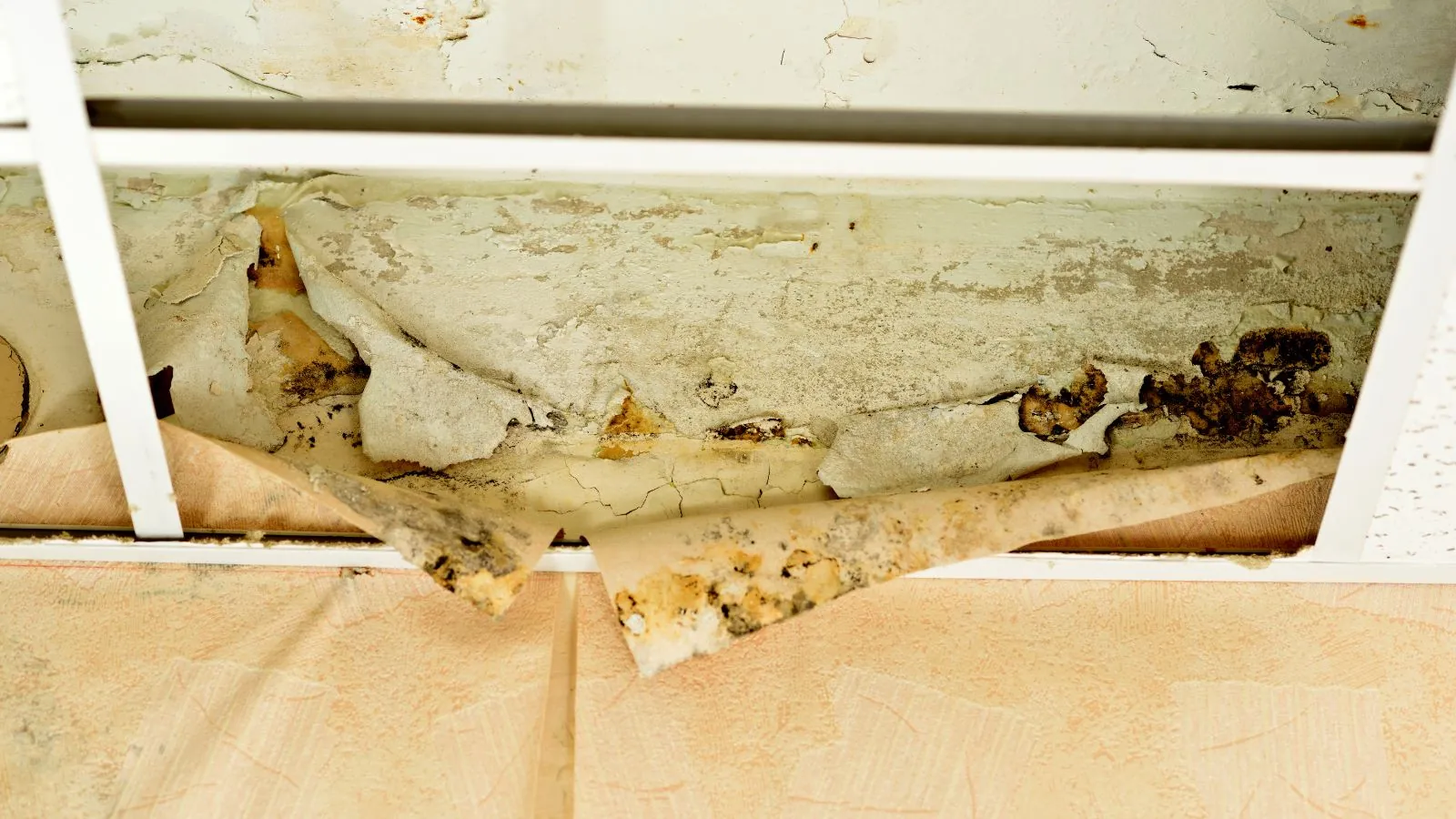
A water loss in a business is an emergency in a different way, because every hour closed is lost work, and the 24/7 emergency line takes commercial calls at any hour. While you wait, shut off the water to the affected area if you can, keep staff and customers out of wet areas near electrical equipment, lift inventory and records off the floor and take photos of everything before it moves.
Commercial water damage restoration is the extraction, drying and repair of water-damaged space in stores, offices, restaurants, warehouses and multi-unit residential buildings. The science is the same as a house, but the job is planned around the people who still have to use the building. If the water is already out and you need the building dried, the process is explained on the structural drying page.
When a commercial water loss is an emergency
Water in a commercial building often reaches more than the room it started in. It can run along a shared slab, down a wall into the unit below or across a suite divided by thin partitions. In a multi-tenant building a leak in one suite becomes a problem for the neighbors within hours.
Protect people and equipment first
Keep staff and customers away from wet floors near electrical panels, servers or machinery. If water has reached power equipment, cut power only from a dry location, or call the utility or 911 for any electrical or gas concern before you call the restoration line.
How commercial jobs are planned differently
Residential work usually starts at the front door and finishes room by room. Commercial work is scoped by what must stay open.
- Phasing: the building is divided into zones so that dry areas can reopen while wet ones are dried.
- After-hours work: noisy extraction and equipment setup can be scheduled outside business hours when the loss allows it.
- Equipment footprint: air movers and dehumidifiers are placed to keep exits, aisles and ADA routes clear.
- Documentation: moisture maps, photos and daily drying logs support a claim or a landlord report.
Ask for the phasing plan early. A good plan names the zones, the equipment and the expected number of drying days before work starts.
Why Linden buildings are a mix
Linden is not a single kind of building stock. According to the Census Bureau's 2013 to 2017 profile for the city, a little under half of housing units are single-family detached homes, and nearly a quarter are in buildings with three or more units, so many Linden buildings share walls, ceilings and plumbing stacks. A leak in one apartment can reach three others.
Commercial space along the Route 1 and 9 corridor and near the Turnpike is a different mix again, with warehouse slabs, drop ceilings and rooftop equipment. Roof drains and rooftop units are common sources, which is why a ceiling water damage problem in a store often points to the roof or the HVAC above it.
Water categories in commercial settings
| Source | Typical category | Notes |
|---|---|---|
| Supply line or fire sprinkler line break | 1 | Fast, large volume. Dry in place if caught early. |
| Roof leak or drain overflow | 1 to 2 | Insulation and ceiling tiles often removed. |
| Floor drain or sewer backup | 3 | See the sewage backup page. Protective gear required. |
| Storm or flood water | 3 | Porous materials removed. |
If a drain or sewer line is the source, the sewage backup cleanup page explains the safety limits that apply to businesses too.
Water loss in your building?
Call the 24/7 line and describe the space, the source and what must stay open.
What drives the cost
Cost factors for commercial water damage
- Water category and source: contaminated water adds protective gear and disposal.
- Square footage and zones: more zones mean more equipment and monitoring.
- Materials: drop ceilings, carpet tile, drywall, insulation and flooring dry differently.
- Hours and access: after-hours scheduling and restricted access change labor planning.
- Drying days: equipment runs until readings are dry, and large rooms take longer to condition.
To get a real number for your building, call (833) 521-1033 and describe the loss.
Insurance and documentation
Commercial property policies differ widely. Sudden and accidental water damage is often covered while gradual leaks and flood often are not, and business interruption is a separate coverage in some policies. Read your policy, ask your insurer and keep a record of when you closed, what was damaged and what was spent. Photos, moisture readings and daily drying logs all help.
If you are a tenant, notify the landlord or property manager right away.
Commercial water damage questions in Linden
Do you handle commercial water emergencies at night or on weekends in Linden?
Yes. The emergency line is open 24/7. Call at any hour with the type of space, the source of the water and any equipment at risk.
Can part of the building stay open while you dry the rest?
Often, yes. Work is divided into zones and equipment is placed to keep exits and working areas clear. That depends on the water category and where the water traveled.
Do you work on apartment buildings and multi-unit properties?
Yes. Multi-unit buildings are common in Linden, and a leak often reaches more than one unit. Coordinate with the owner or property manager and document each unit.
Do you serve Elizabeth and Roselle Park businesses?
Yes. The service area includes Elizabeth and Roselle Park as well as all of Linden.