
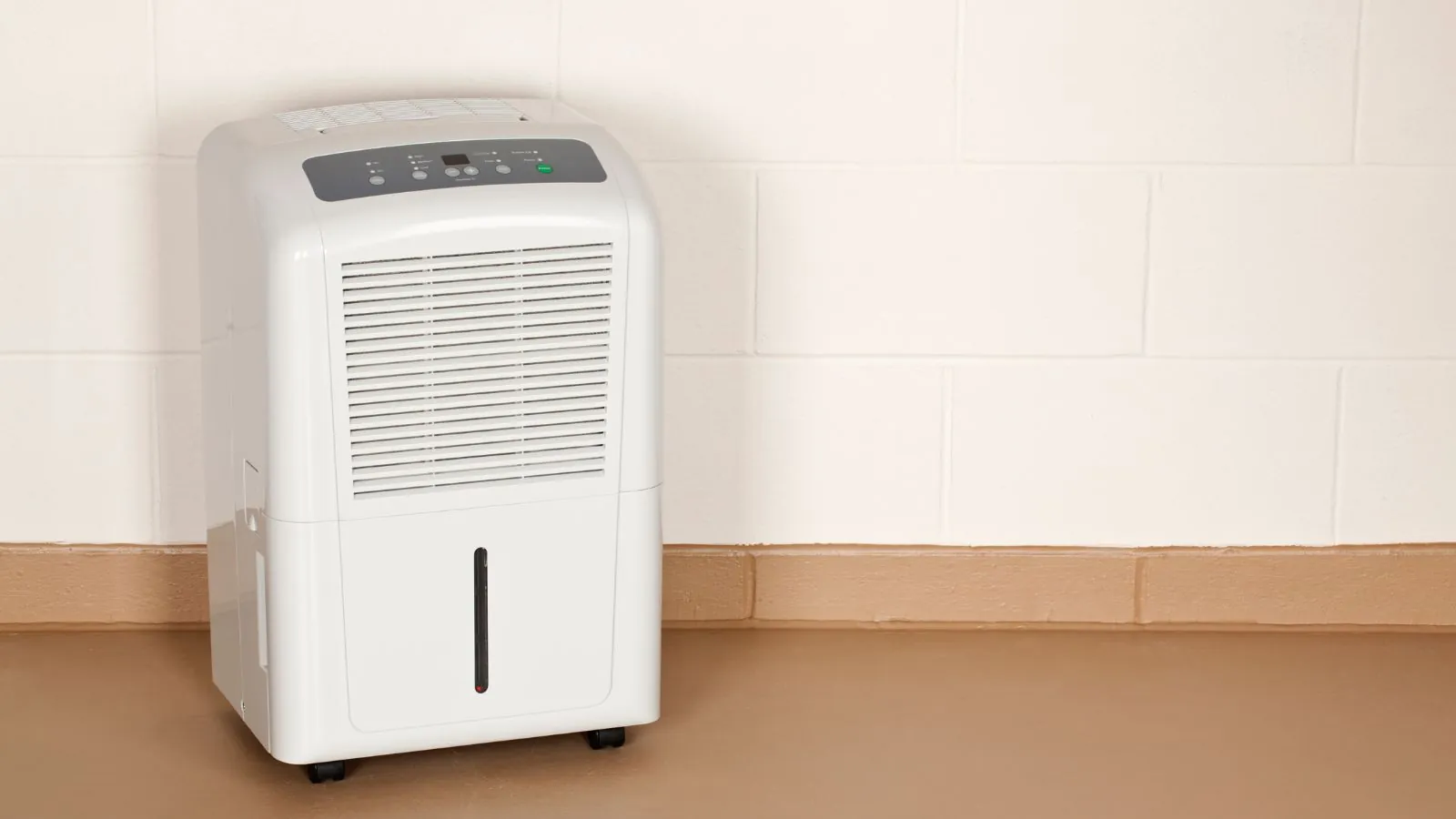
Structural drying and dehumidification is the process of removing moisture from walls, floors, framing and the air after water has been removed, using air movers, dehumidifiers and moisture readings until the building reaches a dry standard.
Walls still damp, a musty smell or a floor that is starting to cup?
Those are the signs most people notice before they know the name of the fix. A wall that feels cool and slightly damp days after a leak, a floor that has started to rise at the seams, baseboards that are swelling or a musty smell that returns after the mop dries are all moisture still trapped in building materials.
The wet surface may be dry to the touch while the drywall core, the insulation and the subfloor are not.
The fix for those symptoms is structural drying, which is a measured process and not a guess. It uses meters to find where moisture is and equipment to remove it.
What structural drying does
Drying works by moving air across wet surfaces and then removing the moisture from that air so the cycle can continue. Without both halves, the air just fills with humidity and the moisture settles elsewhere.
- Air movers push dry air across wet surfaces to help water evaporate.
- LGR dehumidifiers pull moisture out of the air, and desiccant units are used in cold or very damp conditions.
- Wall cavity drying uses small holes and a flow of dry air to reach moisture inside walls without removing the whole wall.
- Subfloor drying uses panels and mats to dry under hardwood and tile where moisture hides.
Moisture mapping and monitoring
The first step is a moisture map. A moisture meter and thermal imaging camera identify wet areas, and readings are taken on the wet materials and on dry reference materials of the same type elsewhere in the building. The reference reading becomes the drying goal.
Air temperature and humidity are logged with a hygrometer, since the relationship between temperature, humidity and moisture in the air determines how fast drying proceeds. That science is called psychrometrics, and it is why a crew will adjust equipment instead of running it blindly.
| Reading | Tool | Why it matters |
|---|---|---|
| Moisture in materials | Moisture meter | Shows what is still wet |
| Hidden moisture | Thermal imaging camera | Finds water behind walls and under floors |
| Air temperature and humidity | Hygrometer | Shows whether drying conditions are working |
| Daily drying log | Written record | Documents progress for you and your insurer |
Water mitigation, explained
Water mitigation is the term for the early actions that limit how much damage occurs, including stopping the source, removing standing water and starting drying. It overlaps with water damage restoration, which includes mitigation and also repair. On this page, mitigation is the first days of drying. After that, repair begins. For the whole service, see the water extraction page for the first step and the homepage for the overall picture.
How long does drying take
The EPA advises drying water-damaged areas in the first 24 to 48 hours to prevent mold growth, so equipment should be in place quickly. Total drying time depends on the material, the amount of water, the size of the space and the weather. Hardwood, plaster, concrete and insulation are slower than carpet and drywall.
Most jobs take several days. The goal is not a date, it is readings that match the dry standard. A crew checks every day, moves equipment and decides when to remove it.
Walls or floors still wet?
Call and describe what you see, smell or feel.
When materials cannot be dried
Drying cannot save everything. Materials that were soaked with contaminated water, saturated insulation, particleboard and some padding are usually removed. A carpeted floor is a common case, and the carpet water damage page explains when carpet can be dried and when it must go. Hardwood has its own limits, covered on the hardwood floor water damage page.
What drives the cost
Cost factors for structural drying
- Materials and area: more wet material and more square footage need more equipment.
- Water category: contaminated water can mean removal instead of drying.
- Equipment count: the number of air movers and dehumidifiers.
- Drying days: equipment time is the largest variable.
- Access and conditions: cold weather, closed spaces or concrete slow drying.
To get a real number, call (833) 521-1033 and describe the wet area.
Insurance note
Drying logs, moisture maps and photos help document that a loss was handled correctly. In general, sudden and accidental water damage is often covered and gradual leaks are often not. Ask your insurer and keep the drying log your restoration crew gives you.
What to do before help arrives
Leave equipment running and do not move it. Keep doors and windows shut in the drying area unless told otherwise, and keep cords away from damp floors.
Water damage work is guided by ANSI/IICRC S500, the published standard for professional water damage restoration.
Structural drying questions in Linden
Why does my wall feel damp days after the leak was fixed?
The surface can dry while the drywall core, insulation and framing stay wet. A moisture meter and thermal camera will show where the moisture is.
Can I dry my home with household fans and a dehumidifier?
For a small damp area, maybe. For a wet wall, subfloor or slab, household equipment is too weak and does not give readings. Professional LGR dehumidifiers and air movers are much stronger.
How do you know when it is dry?
Moisture readings in the wet material are compared with dry reference readings from the same material. When they match, it is dry.
Is drying needed if the water was clean?
Yes. Clean water still soaks drywall and framing, and wet materials left for days can grow mold.