
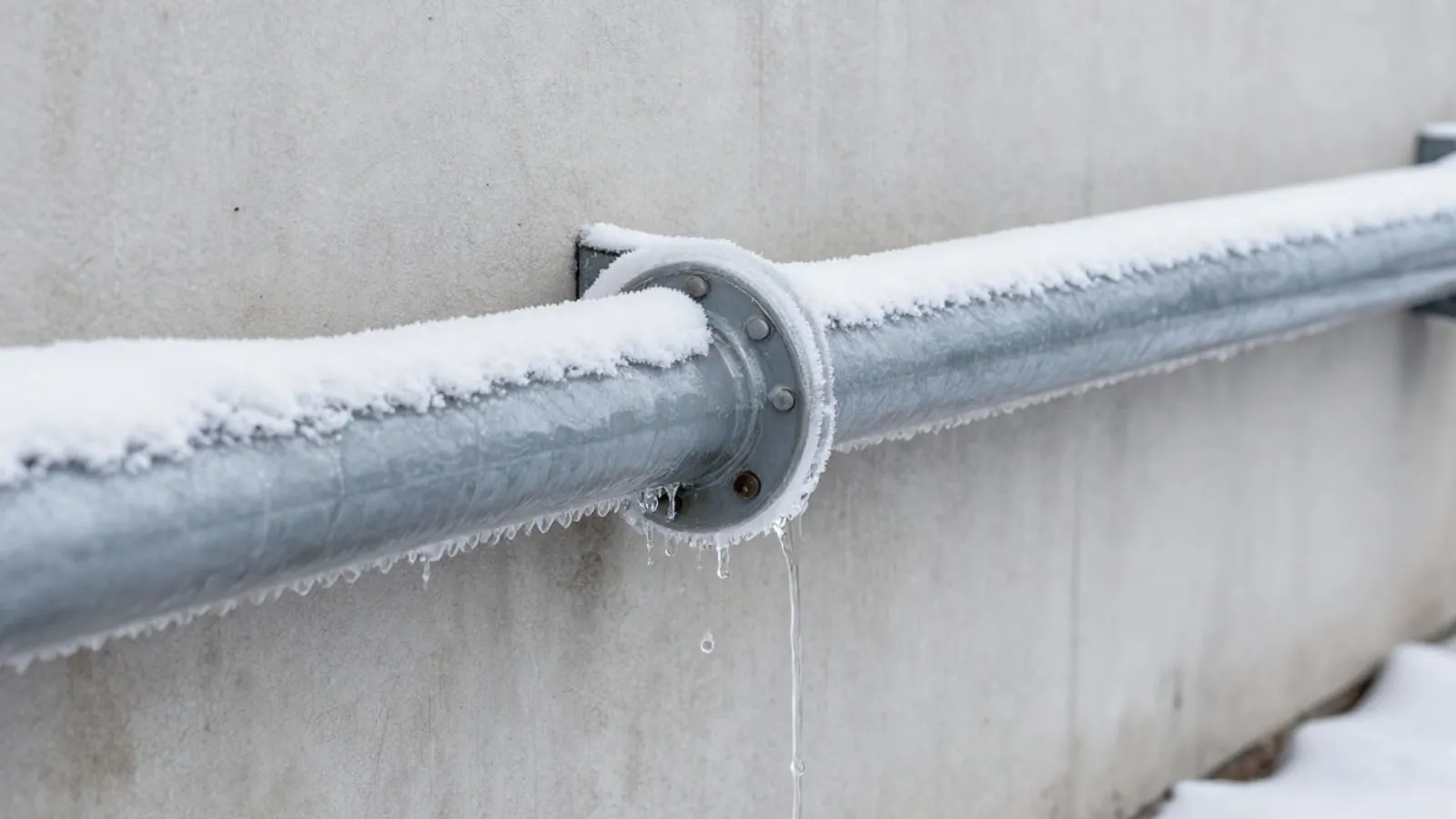
A frozen pipe that has cracked is an emergency the moment it thaws, and the 24/7 emergency line is open at any hour. If you find a frozen line, shut off the main water valve before it thaws, open the nearest faucet and keep heat on in the room. Never use an open flame to thaw a pipe. If water is already flowing, close the valve and call.
Frozen pipe water damage is the flooding that follows when ice in a supply line splits the pipe and then thaws. The ice often holds the water back until it melts, so the leak starts when the temperature rises, sometimes when no one is home. The source here is ice. For a line that burst under pressure without freezing, see burst pipe water damage.
How freezing breaks a pipe
Water expands as it freezes. In a closed pipe, the pressure builds between the ice blockage and a closed faucet, and the pipe splits at its weakest point. The split can be small and hard to see until the ice melts.
Pipes in exterior walls, attics, crawl spaces, garages and unheated basements are the most at risk. Lines near a bad window, a gap in insulation or a vent can freeze when the rest of the house is fine.
What to do before the thaw
- Shut off the main water valve.
- Open the faucet on the frozen line to relieve pressure.
- Add gentle heat, such as a space heater at a safe distance or a hair dryer, never an open flame.
- Check the pipe for cracks and bulges. If you see one, leave it closed and call a plumber.
- Call the 24/7 line if there is any water on the floor.
Water and electricity
If water is dripping near outlets, light fixtures or the panel, stay out and cut power only from a dry spot. Call the utility or 911 for any electrical concern before you call the restoration line.
What happens after the thaw
When the ice melts, water flows from the crack at full pressure if the main valve is open. It can run inside a wall or ceiling for hours. The cleanup follows the same steps as any supply line failure. Extraction comes first, then a moisture map, then removal of wet insulation and drywall that cannot be dried. Air movers and an LGR dehumidifier dry the cavity.
| Location | What gets wet | Typical response |
|---|---|---|
| Exterior wall | Wall cavity, insulation, drywall | Dry cavity or flood cut |
| Attic | Insulation, ceiling below | Remove insulation, dry ceiling |
| Crawl space or basement | Joists, subfloor, stored items | Extract, dry |
| Garage | Slab, walls | Extract, dry |
For ceiling damage below an attic pipe, see ceiling water damage repair.
How often does this happen in Linden
The county hazard mitigation plan does not give a frozen pipe rate for Linden, and neither does this page. What is known is that winter freezes happen in central New Jersey and that older homes with exterior-wall plumbing are the most exposed.
About 59 percent of Linden's housing units were built before 1960 according to the Census Bureau's 2013 to 2017 profile. If your pipes freeze, they are likely in an exterior wall or an unheated space.
Frozen pipe leaking now?
Call the 24/7 line after closing the main valve.
What drives the cost
Cost factors for frozen pipe damage
- Location of the crack: wall, ceiling or floor.
- How long it ran: time after the thaw.
- Rooms affected: water travels along the framing.
- Insulation and drywall: removal and replacement.
- Drying days: equipment runs until readings are dry.
To get a real number, call (833) 521-1033 and describe where the pipe is.
Insurance note
Sudden pipe freezes are often covered under homeowners policies, but policies may require that heat was maintained in an unoccupied home. Ask your insurer. Photograph the split pipe and the damage and keep receipts.
Frozen pipe questions in Linden
Do you handle frozen pipe emergencies at night or on weekends in Linden?
Yes. The emergency line is answered 24/7. Close the main valve first.
Should I thaw a frozen pipe myself?
Only gently, with warm air, and only if the pipe has not cracked. Never use an open flame.
Who fixes the cracked pipe itself?
A plumber repairs it. Restoration handles the water and the building damage.
How do I prevent it next time?
Insulate exposed lines, seal gaps and keep heat on. A plumber can advise on exposed runs.