
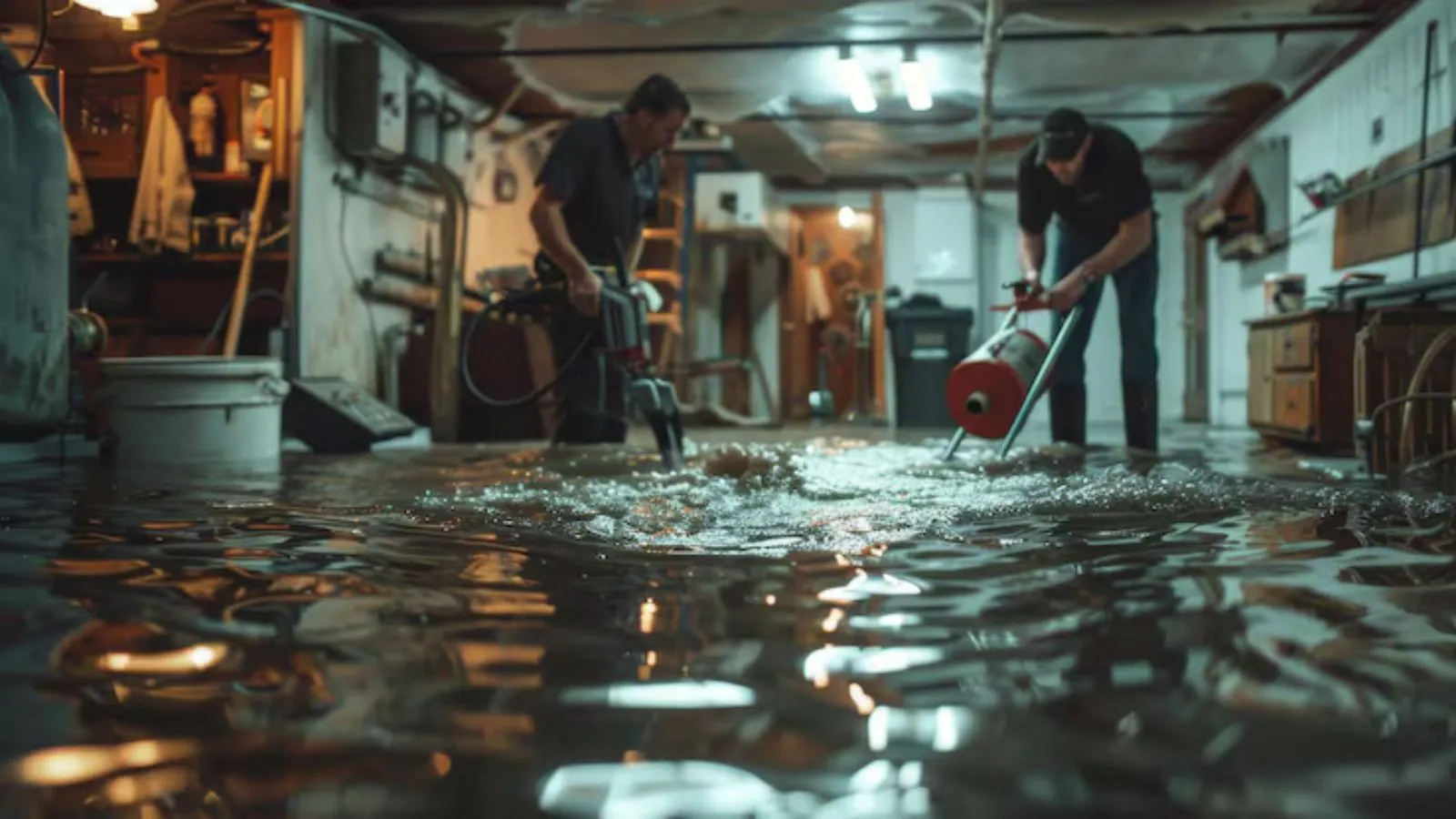
Standing water is an emergency, and the 24/7 emergency line takes extraction calls at any hour. While you wait, stop the source if it is safe to reach, turn off power to wet areas only from a dry spot, lift valuables and furniture off the floor and keep children and pets out of water you cannot identify.
Water extraction is the removal of standing water from a building using pumps and extraction units, before drying starts. It is the first step on almost every water loss, and it is the step that decides how much water ever reaches the framing, insulation and subfloor. If the question is how to dry the building afterward, that is structural drying, a separate phase with its own equipment.
When standing water is an emergency
Water on a hard floor can look harmless, but it is already moving into baseboards, door jambs and the edges of carpet. On a carpeted floor it wicks through the pad and reaches the subfloor within hours. In a multi-story building it can drop through a ceiling to the unit below.
Check the power before you step in
Do not stand in water that touches an outlet, power strip, appliance or the panel. If you are unsure, stay out and call the utility or 911 for any electrical or gas concern before you call for extraction.
How extraction is done
The equipment depends on depth and surface.
- Submersible pumps move deep water, such as a flooded basement, through hoses to a safe discharge point.
- Portable extraction units pull water from carpet and pad and from hard floors that hold a shallow film.
- Truck-mounted extraction is used on larger losses where a long run of hose and high suction save time.
- Wet-dry vacuums handle corners, stairs and tight spaces where a bigger unit cannot reach.
Water is pulled from low points first. Then the crew checks wall bases, behind kitchen toe kicks and under flooring with moisture meters, because the water that is visible is rarely all of it.
Extraction is not the same as drying
Pulling out the standing water does not make a building dry. Wet drywall, framing, insulation and subfloor still hold moisture that no pump can reach. That moisture is the reason mold can start in the first 24 to 48 hours, according to the US EPA, if materials stay wet.
For that reason most extraction jobs lead straight into air movers, LGR dehumidifiers and daily moisture readings. When the source is a failed pipe, see burst pipe water damage for how that source is handled, and when the water is from a storm, flood damage cleanup covers the contaminated side.
What kind of water is it
Clean water from a supply line can often be extracted and dried in place. Water that came from a toilet, a drain or outdoors is a different job, because contaminated water carries bacteria and soaks into porous materials. In that case the pad, carpet and lower wallboard are usually removed instead of dried.
| Water source | How it is handled |
|---|---|
| Clean supply line or tank | Extract, then dry carpet and walls in place where possible |
| Appliance overflow | Extract, remove pad if soiled, dry the structure |
| Rising water from outside | Extract, remove porous materials, clean and treat surfaces |
| Sewage or drain backup | Strict safety limits, removal of affected porous materials |
Standing water on your floor?
Call now and tell us how deep it is and where it came from.
What drives the cost
Cost factors for water extraction
- Volume of water: A film on a kitchen floor and a flooded basement need different equipment and time.
- Water category: Category 3 water adds protective gear, disposal and removal of porous materials.
- Access: Stairs, tight rooms and long hose runs add time.
- Affected area: The number of rooms and floors that took water.
- Follow-on drying: Extraction is usually followed by drying days that are scoped separately.
To get a real number for your situation, call (833) 521-1033 and describe the water.
Insurance note
Sudden and accidental water, like a burst pipe or an appliance failure, is often covered under a homeowners policy, while gradual leaks and neglect often are not. Flood damage is usually excluded without separate flood coverage. Ask your insurer, take photos of the water before it is moved and keep receipts for any emergency work.
Water extraction questions in Linden
Do you handle water extraction emergencies at night or on weekends in Linden?
Yes. The emergency line is answered 24/7, including nights, weekends and holidays, and callers get safety steps first.
Can I use a shop vacuum myself?
For a small clean spill, a wet-dry vacuum can help. For deeper water, contaminated water or water near electrical equipment, do not. A shop vacuum also does not dry the wall cavity or subfloor underneath.
Do you remove water from Roselle Park and Elizabeth as well?
Yes. The service area includes Roselle Park and Elizabeth, along with all of Linden.
What happens after the water is out?
Moisture meters check walls and floors, and drying equipment is placed if materials are still wet. See the structural drying page for what that looks like.