
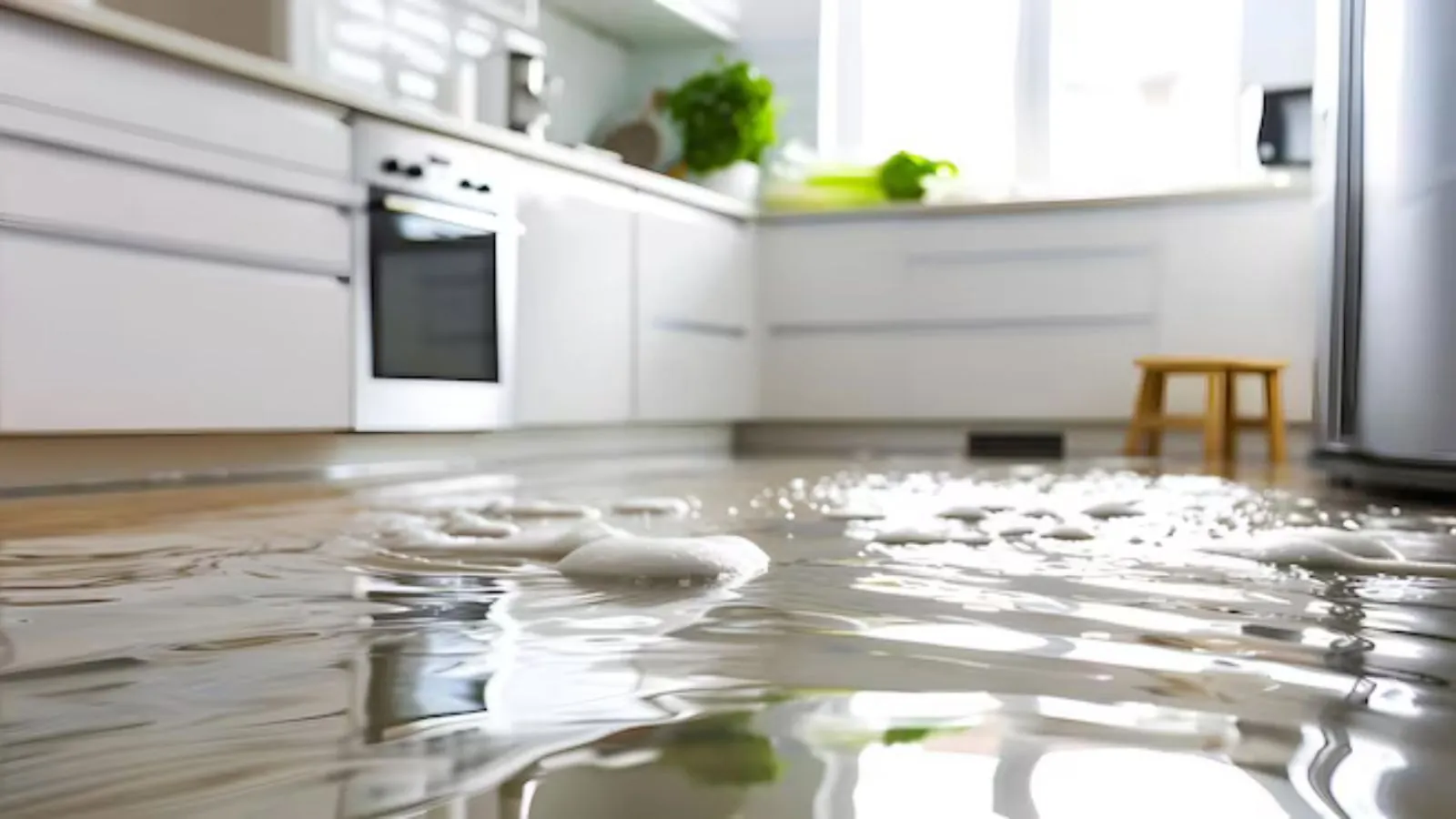
Flood water inside a building is an emergency from the first inch, and the 24/7 emergency line is open at any hour for exactly this call. While you wait, stay out of water that reaches outlets, cords or the electrical panel, keep children and pets out of it and move valuables to higher ground. Do not try to clean it up with a household vacuum.
Flood damage cleanup is the removal, cleaning and drying of a building after river, creek, tidal or surface water has entered it. This water is treated as contaminated, so the work is different from a clean pipe leak. It also differs from storm water damage, which is rain coming through a roof or wall, and from the basement water damage page, which covers sump failures and seepage below grade.
When flood water is an emergency
Treat any flood water as unsafe until someone has checked it. Water that has touched the ground, a drain or a street can carry sewage, fuel, chemicals and bacteria.
Electrical and gas come first
If water is near the electrical panel, outlets or appliances, stay out of the room. Cut power only if you can reach the panel while standing on dry ground. If you smell gas or see sparks, leave and call 911 or the utility before you call the restoration line.
Never wade through flood water to reach a basement or garage. Basements fill quickly and the depth is hard to judge.
Where flood water in Linden comes from
Linden has a flood map with a story in it. The Rahway River forms the southern boundary of the city, and the Arthur Kill runs along the east side. The county hazard mitigation plan names the Rahway River, the Arthur Kill, Marshes Creek, Peach Orchard Brook, West Brook, King's Creek and Piles Creek as sources of riverine and tidal flooding.
The plan also notes that when high tide lines up with heavy rain, water backs up into low areas.
That matters for what you do next. A house near the tidal edge can take water from the bottom up while rain is still falling, so there may be no warning from the street. Superstorm Sandy in 2012 is the documented example, and the Tremley Point area is covered in more detail on its neighborhood page.
The FEMA Flood Map Service Center shows whether a specific address sits in a mapped flood hazard area. Look up your own address rather than assuming from the street name.
Why flood water is treated as Category 3
The ANSI/IICRC S500 standard groups water by contamination. Flood water is generally Category 3, meaning grossly contaminated, even if it looks clear.
| Water source | Category | What it means for cleanup |
|---|---|---|
| Broken supply line, tank leak | 1 | Clean at the source. Dry in place if caught early. |
| Washing machine or dishwasher overflow | 2 | Some contamination. Pad and loose materials are usually removed. |
| River, tidal or surface flood water | 3 | Grossly contaminated. Porous materials are removed, not dried. |
| Sewer or toilet backup | 3 | Grossly contaminated. Strict safety limits apply. |
What flood damage cleanup involves
The order of work matters, and skipping a step shows up later as odor or mold.
- Pumps and extraction units remove standing water first.
- Carpet, pad, lower drywall, insulation and other porous materials that touched flood water are cut out and bagged.
- Hard surfaces and framing are cleaned and treated with an antimicrobial.
- Air movers and LGR dehumidifiers dry the remaining structure, and moisture meters track progress each day.
- Once readings are dry, repair and replacement start.
Solid wood framing and concrete can usually be cleaned and dried. Carpet, upholstery, mattresses and wallboard that sat in flood water usually cannot be restored safely.
Flood water still in the building?
The 24/7 line is open. Describe what you see and get safety steps first.
What drives the cost of flood cleanup
Cost factors for flood damage
- Depth and duration: Water that stood for days soaked deeper and needs more removal than water extracted quickly.
- Square footage affected: Every wet room adds extraction, removal and drying time.
- Materials involved: Carpet and pad come out and are replaced. Framing and slab are cleaned and dried.
- Drying days and equipment: The number of air movers and dehumidifiers and how many days they run.
- Rebuild scope: Drywall, flooring and cabinets after drying are priced separately.
For a real number on your property, call (833) 521-1033 and describe the water.
Insurance and flood damage
Most standard homeowners policies exclude flood damage. Flood coverage is usually a separate policy, often through the National Flood Insurance Program, and a new NFIP policy typically has a waiting period before it takes effect, so it does not help for a flood that is already coming. Sewer or drain backup is often a separate endorsement as well.
Read your policy and ask your insurer what applies. Photograph the water line before cleanup, keep a list of damaged items and save your receipts for emergency work.
Flood damage cleanup questions in Linden
Do you handle flood damage emergencies at night or on weekends in Linden?
Yes. The emergency line is open 24/7, including overnight and on weekends and holidays. Call during the flood and you will get safety steps right away.
Can carpet that sat in flood water be saved?
Usually not. Carpet and pad that touched Category 3 flood water are removed, because contaminants soak into fibers and padding and cannot be reliably cleaned. Hard floors and framing are often saved.
How long does flood damage take to dry?
Extraction can be done in a day, but drying the structure usually takes several days. Moisture readings each day decide when it is dry, not the calendar.
Is flood cleanup different from storm damage cleanup?
Yes. Flood water rises from the ground or a waterway and is contaminated. Storm damage is rain coming through the roof, windows or walls. Call and describe the water, and the right page and process will follow.