
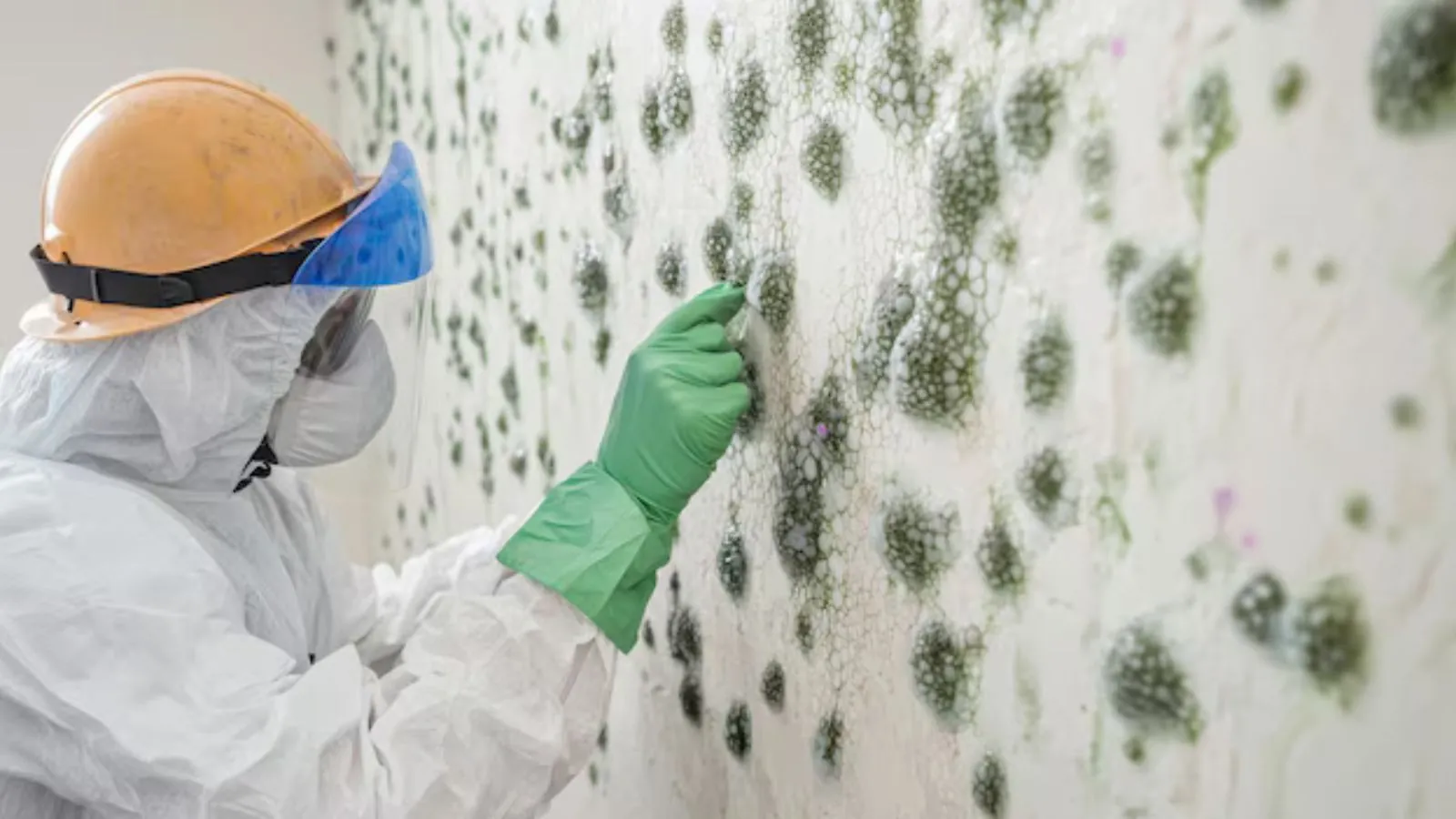
Mold remediation is the process of containing, removing and cleaning mold-affected materials and correcting the moisture that allowed it to grow. The published industry standard for it is ANSI/IICRC S520. Ask any company whether its crews work to that standard, and ask how the moisture source will be handled.
A musty smell, dark spots on a wall or ceiling, or a wall that stays damp?
Those are the signs most people notice before they think the word mold. A musty odor in a basement or closet, dark or fuzzy spots on drywall, ceiling corners or the underside of carpet, paint that bubbles and a wall that never seems to dry all point to moisture that has stayed too long. Visible growth may be only part of it, because mold often grows on the back of materials.
The trade term for fixing it is mold remediation. The fix always has two parts. The moisture has to be removed and its source corrected, and the affected materials have to be cleaned or removed.
Mold needs moisture
According to the US EPA, none of the many types of mold will grow without water or moisture, and water-damaged areas should be dried in the first 24 to 48 hours to prevent growth. That is why most mold follows a leak, a flood, a roof problem or ongoing high humidity. If the moisture is still there, cleaning the mold alone will not last.
This site does not give health advice about mold. Questions about symptoms or exposure belong to a physician.
Inspection and testing
A mold inspection looks at where water has been, checks moisture with a meter and thermal camera and identifies visible growth. Sampling may be used to learn what is present or to confirm cleanup, and who does that matters.
An independent assessor who does not also do the removal avoids a conflict of interest, and some people prefer that. Ask whether your state licenses mold work, since rules differ, and ask what the inspection will and will not tell you.
| Step | What it does |
|---|---|
| Visual inspection | Finds growth and water stains |
| Moisture readings | Finds wet materials, even without visible growth |
| Thermal imaging | Finds cool, damp areas behind surfaces |
| Sampling, when used | Identifies types or confirms cleanup |
| Written scope | Lists what will be removed or cleaned |
How remediation is done under S520
- Fix the moisture source and dry the area, since mold returns where moisture stays.
- Contain the work area with plastic sheeting and negative air, so spores are not spread to clean rooms.
- Protect workers and occupants with respirators, protective suits and a plan for movement through the building.
- Remove affected porous materials, such as drywall, insulation and carpet, and bag them before moving them out.
- Clean surfaces that can be kept, including framing, with HEPA vacuuming and damp wiping.
- Filter the air with HEPA air scrubbers during and after the work.
- Verify that the area is dry and clean before containment is removed.
Small areas of mold on a hard surface are sometimes handled by homeowners. The EPA guide says an area less than about 10 square feet can often be handled by the owner, and that a larger area calls for the guidance in its commercial-building document. If you are unsure, ask.
Mold or a damp smell in your home?
Call and describe where you see it and where water has been.
Mold after a water loss
Mold is most often the second problem after a first one. If wet drywall, carpet or insulation was not dried quickly, mold can appear. See carpet water damage and wall and drywall water damage for how wet materials are handled early, and crawl space water damage for under-floor moisture, where mold is common.
Linden and mold
Mold risk follows moisture. In Linden, moisture comes from the Rahway River and Arthur Kill flood risk that the county hazard mitigation plan describes. It also comes from storm drain backups and from old plumbing in a housing stock where about 59 percent of units were built before 1960 according to the Census Bureau's 2013 to 2017 profile. Ordinary humidity adds to it.
Basements and ground-floor apartments near the water are the usual places to check. The ZIP code for the area served is 07036.
What drives the cost
Cost factors for mold remediation
- Area affected: square footage of growth and hidden growth behind it.
- Materials: drywall and insulation removal versus cleaning framing.
- Containment and air filtration: more setup for larger work.
- Moisture correction: drying equipment and repairs to the source.
- Rebuild scope: replacing removed materials after clearance.
To get a real number, call (833) 521-1033 and describe the area.
Insurance note
Mold coverage varies and is often limited, and often depends on whether the water that caused it was a covered event. Ask your insurer. Photograph the growth and the water source and keep records of dates.
What to do before help arrives
Stay out of the affected room if you can, keep the door closed and do not disturb the growth. Do not dry-brush, blow air at or paint over mold. Find and stop the moisture source first.
Mold work is guided by ANSI/IICRC S520, the published standard for professional mold remediation.
Mold remediation questions in Linden
Will the mold come back after remediation?
It stays gone only if the moisture is fixed. No one can promise it will never return, so ask about the plan for the moisture.
Do I need testing before removal?
Not always. Visible mold and a known moisture source may be enough to start. Ask what testing would add.
Does bleach kill mold on drywall?
Porous materials like drywall cannot be cleaned reliably, and the EPA guidance is to remove them when growth is extensive.
Does my state license mold work?
Ask the company and check with the state agency, since rules differ.