
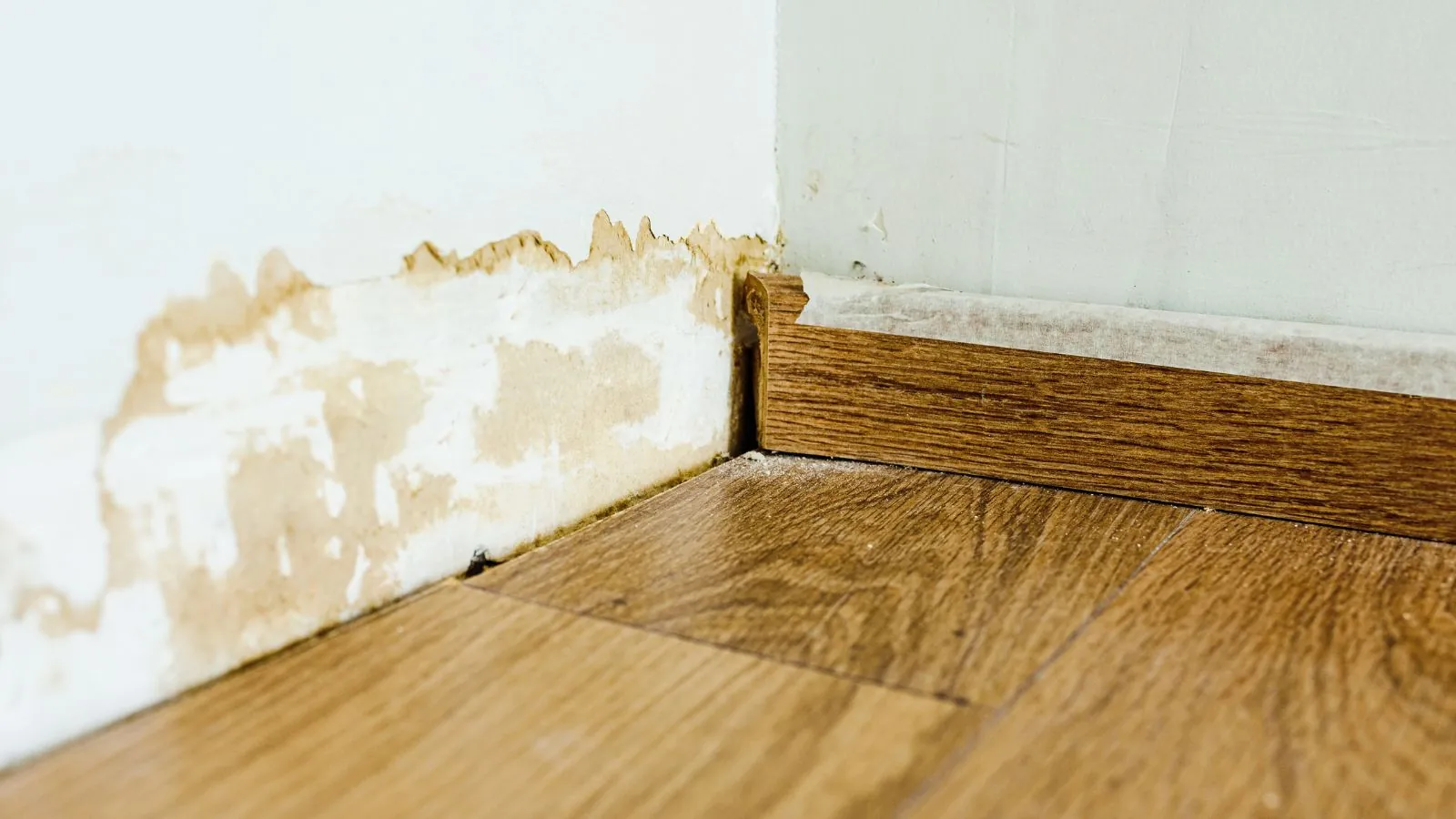
Wall and drywall water damage repair is the assessment, drying and repair of wall surfaces and the cavities behind them after water has soaked in. Drywall is gypsum between two sheets of paper, and it absorbs water quickly. Once wet, it softens, stains and can grow mold, and the insulation behind it holds water longer than the surface does.
This page is about the wall. If the damage is on the ceiling, see ceiling water damage repair. If the main problem is a wet floor, the hardwood floor and carpet pages cover those materials.
Signs of water in a wall
- A brown or yellow stain, often with a darker ring around the edge.
- Paint that bubbles, blisters or peels.
- A soft or crumbly spot when pressed, or a bulge in the surface.
- Swollen or lifting baseboards and trim.
- A musty smell that does not go away.
- A cold, damp feeling or a reading from a moisture meter.
A stain only shows where the water finally reached the surface. The wet area behind it is often larger.
How a wet wall is assessed
A moisture meter reads the drywall and framing. A thermal imaging camera shows temperature differences that suggest wet areas. A small inspection opening may be made to look inside, since some wall damage cannot be seen from the room. The source also needs to be found, so plumbing, windows and exterior walls are checked.
Drying or replacing
| Condition | Typical approach |
|---|---|
| Surface stain, dry core, clean water | Seal and repaint after the source is fixed |
| Wet drywall, clean water, caught early | Dry in place with air flow through small openings |
| Soft or bulging drywall | Cut out and replace |
| Wet insulation | Remove, since it holds water against the wall |
| Contaminated water | Remove affected drywall and insulation |
When a section is cut out, it is usually cut in a clean line above the wet line, which is called a flood cut. The cavity is dried, and new drywall is installed, taped, textured and painted. Painting over a wet wall is not repair. It hides the damage while the moisture does more.
Common sources
Pipes inside walls are a common source, and burst pipe water damage explains what happens when a supply line fails. In Linden, about 59 percent of homes were built before 1960 according to the Census Bureau's 2013 to 2017 profile, and shared walls in two-family buildings pass leaks between units.
Exterior walls take water from windows, siding and roofs. If the wall is on the wet side of a basement, the basement water damage page applies.
Mold and walls
Mold needs moisture, and the EPA advises drying water-damaged areas in the first 24 to 48 hours to prevent growth. If drywall has been wet for more than a day or two, mold may be present. See mold remediation for what that requires.
Wall wet or stained?
Call and describe it, and get next steps.
What drives the cost
Cost factors for wall water damage
- Area and height: more wall means more drying or replacement.
- Insulation type: some insulation can be dried, some cannot.
- Source and category: contaminated water adds removal.
- Drying days: equipment runs until readings are dry.
- Finish work: taping, texture, primer and paint.
To get a real number, call (833) 521-1033 and describe the wall.
Insurance note
Sudden and accidental water damage is often covered, and slow leaks are often not. Ask your insurer, take photos of the stain and meter readings and keep receipts.
What to do before help arrives
Turn off power to outlets in a wet wall and keep people away from a bulging or sagging ceiling or wall. Do not poke at wet drywall, since it can release water and debris.
Water damage work is guided by ANSI/IICRC S500, the published standard for professional water damage restoration.
Wall and drywall questions in Linden
Can I paint over a water stain on a wall?
Only after the wall is dry and the source is fixed. Use a stain-blocking primer, since the stain will otherwise bleed through.
Does drywall always need to be replaced after water?
No. Clean water caught early can dry in place. Soft, bulging or contaminated drywall is replaced.
How do you dry a wall without taking it down?
Small openings allow air flow through the cavity, and a dehumidifier removes the moisture from the air. Readings show when it is dry.
What if the wall is wet again after it dried?
Then the source is probably still active. Find and fix it before repair.