
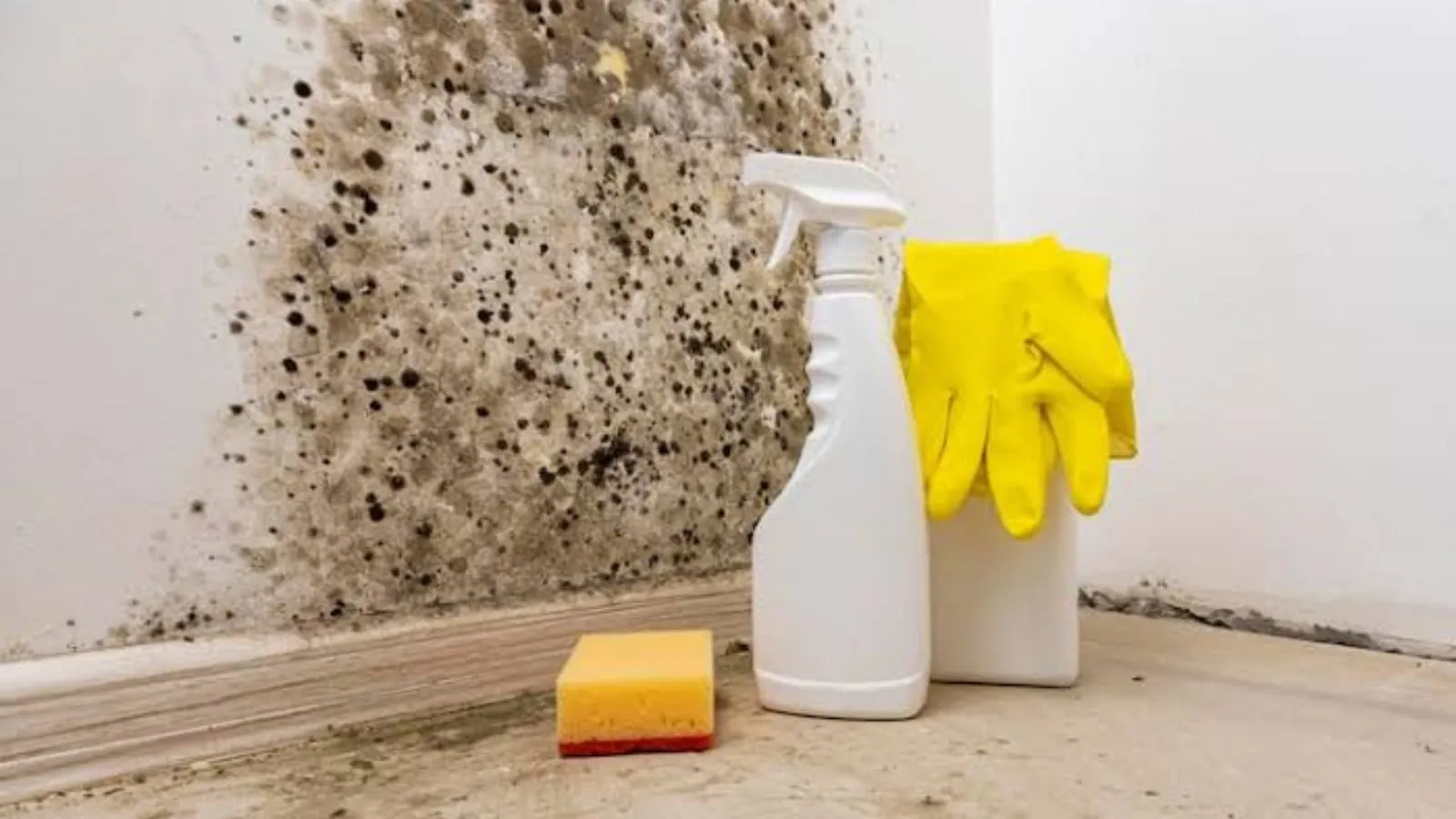
Getting rid of mold is a two-part job. You remove the growth, and you remove the moisture that allowed it. If you only do the first part, mold tends to return to the same spot.
This guide covers what a homeowner can do for a small area, what to avoid and when a job is large enough to need professional help. It does not give health advice, and symptom questions belong to a physician.
Step one: find the moisture
The EPA says none of the many types of mold will grow without water or moisture. Before you clean, find the water.
- Check for plumbing leaks, including under sinks and behind toilets.
- Look for roof or window leaks above stained areas.
- Check the basement for seepage, condensation and a damp floor.
- Look at humidity in closets, bathrooms and laundry rooms.
The EPA advises fixing plumbing leaks and other water problems as soon as possible. If the source is still active, cleaning is wasted.
Step two: decide whether it is a DIY job
The EPA says you can usually handle a small job yourself when the moldy area is less than about 10 square feet, roughly a patch three feet by three feet. Larger areas, anything linked to heavy water damage or mold inside a wall or under flooring calls for more care and often for a professional.
| Situation | Usual call |
|---|---|
| Small spot on tile or painted wall, dry, source fixed | Often DIY |
| Area under about 10 square feet on a hard surface | Often DIY |
| Patch on drywall that is soft or bulging | Professional or replacement |
| Growth after a flood or sewage | Professional |
| Large or repeated growth | Professional |
| Musty smell with nothing visible | Find the source, consider a professional |
Step three: clean a small hard-surface area
The EPA guidance is to scrub mold off hard surfaces with detergent and water and dry them completely. The CDC adds that mold can be removed from hard surfaces with household products, soap and water, or a bleach solution. Whatever you use, follow the product label, never mix cleaning products, ventilate the room and wear gloves and eye protection.
- Wet the area lightly with detergent and water so you do not raise dust.
- Scrub the surface, rinse and dry fully with towels and a fan.
- Bag the cloths and sponges and take them out of the house.
- Check the spot again in a few days. If it returns, the moisture is still there.
What not to do
- Do not dry-brush or sand mold, which sends spores into the air.
- Do not paint over it. Paint does not stop mold and the area will bubble.
- Do not seal mold in a closet or cabinet.
- Do not run a fan across the growth toward other rooms.
Porous materials
The EPA says absorbent or porous materials such as ceiling tiles and carpet may have to be thrown away if they become moldy. Drywall that is moldy or soft is also usually replaced, since it cannot be cleaned reliably through the paper. Cut-out materials should be bagged before they are carried out.
Drying and preventing return
After cleaning, keep the area dry. A dehumidifier helps in basements and closets. Fix gutters, grading and leaks, and use exhaust fans in bathrooms and kitchens. If a water event happened, dry the structure quickly, since the first 24 to 48 hours are the window the EPA gives for preventing mold growth. A complete drying job is covered on the structural drying page.
Mold cleanup in a Linden building
Many Linden homes share walls. The Census Bureau's 2013 to 2017 profile puts about 28 percent of the city's housing units in two-unit buildings and about 23 percent in buildings of three or more units.
In shared buildings, a moisture problem next door, in the unit above or in a shared basement can be the source of mold in your wall. Tell your landlord or neighbor in writing, and take photos. Fixing the source may not be in your hands, and a cleanup that ignores it will not last.
When to call a professional
Call for help if the area is larger than a small patch, if it follows a flood or sewage, if it is inside a wall or under flooring, if the moisture source is unclear or if you simply do not want to do it yourself.
The page on mold remediation explains how containment, removal and cleaning are done under the S520 standard, and the carpet water damage page covers wet carpet that may be involved.
Calls come in from Roselle Park and Elizabeth as well as Linden.
Questions about removing mold in Linden homes
Can I remove mold from drywall myself?
A tiny surface spot can be cleaned, but moldy or soft drywall is usually replaced, since mold grows into the paper.
Do I have to test before cleaning?
The CDC says you do not need to know the type of mold. Any type needs to be removed.
What if the mold keeps returning to the same wall?
Moisture is still reaching it. Look for a leak, condensation or a wet exterior wall.
What if I rent in Linden?
Tell your landlord in writing and take photos. The landlord is usually responsible for the source and the building.