
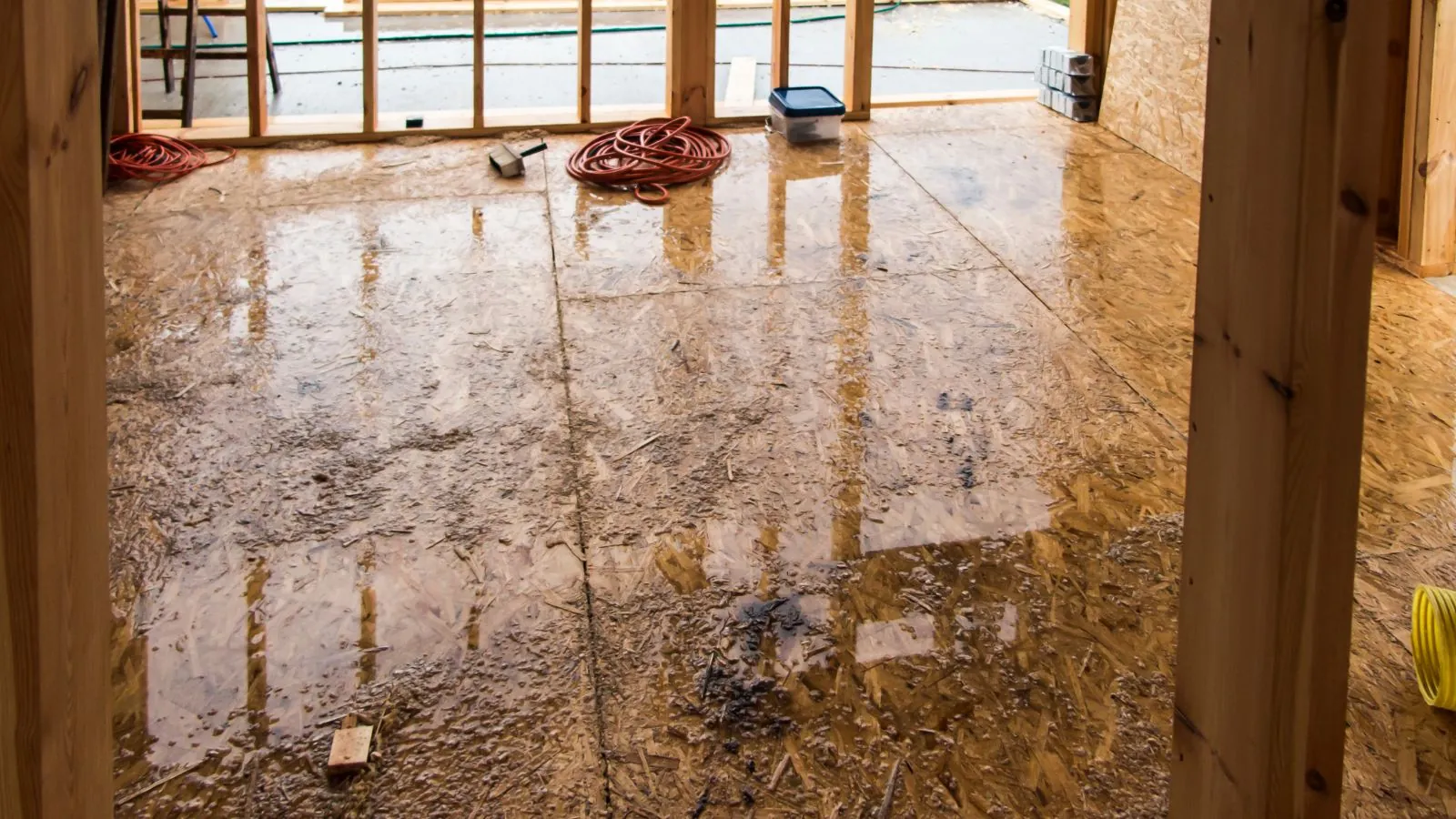
The leak is fixed, the floor looks dry and the mop has been put away, but the house still smells damp. That musty smell is not leftover air.
It comes from materials that are still holding moisture, or from microbial growth that began while they were wet. This guide explains the common sources, how to track them down and what the smell does and does not tell you. It gives no health advice.
What the smell means
The CDC notes that mold can smell musty. A musty odor after water damage is a reasonable sign that moisture is present somewhere you cannot see, and it is a reason to check, not proof of any one cause. Odor is easy to cover with air fresheners and hard to fix without finding the source.
Where the smell usually comes from
- Wet carpet pad. The pad holds much more water than the carpet and dries slowly if left in place.
- Wall cavities. Wet insulation and the back of drywall stay damp long after the face feels dry.
- Subfloor and slab. Wood subfloor and concrete release moisture slowly into the room above.
- Crawl spaces and basements. Damp soil, wet insulation and block walls can push odor into the living space.
- Closed cabinets. Water under a sink or behind a dishwasher can soak cabinet bases that never get airflow.
- Furniture and boxes. Wet upholstery, mattresses and stored cardboard hold odor and moisture.
A simple way to track it
- Walk through the house and note where the smell is strongest.
- Check the floor and the base of walls with your hand. Look for cool, damp spots.
- Lift a corner of carpet and smell the pad.
- Open cabinet doors and check the back and bottom.
- Check the basement or crawl space for damp soil, wet insulation and standing water.
- Use a moisture meter if you have one, or ask a professional to map it.
| Smell location | Likely source | Next step |
|---|---|---|
| Strongest at one wall | Wet wall cavity or insulation | Moisture readings, open a small inspection hole |
| Strongest at the floor | Wet pad or subfloor | Lift carpet and check the pad |
| Strongest in a basement | Damp block, wet items or standing water | Dry, remove wet items, check for leaks |
| Under a sink | Wet cabinet base | Dry the cabinet, fix the leak |
| Rotten egg or sewage smell | Dry drain trap or sewer problem | Run water in the drain, check for backup |
Is it sewer smell
A musty smell and a sewage smell are different. A floor drain that has not been used in a while can lose the water in its trap, and sewer odor can come up the drain. Running water in it for a minute often refills the trap.
If the smell is strong, or water backs up, it may be a drain or sewer problem. In that case the sewage backup page applies, and in Linden the Linden Roselle Sewerage Authority handles the public sewer. Do not mix up the two, since sewage is contaminated water.
What deodorizing can and cannot do
Air fresheners, ozone machines and fogging may change how a room smells, but if the source is a wet material, the smell returns. The fix is to dry or remove the material. The EPA advises drying water-damaged areas in the first 24 to 48 hours to prevent mold growth, and a musty smell days later is a sign that this did not fully happen.
When it is mold
If you find visible growth, a dark spot or a bubbled paint area over a damp wall, the page on what mold looks like in a Linden home applies, and the next steps are on the mold remediation page. For a small area on a hard surface, the EPA says you can often handle less than about 10 square feet yourself.
Musty smells in Linden buildings
Linden has older housing, and the Census Bureau's 2013 to 2017 profile says about 59 percent of units were built before 1960. In an older house, odors often come from the basement or a crawl space, from old plaster walls that took on water or from original wood floors under newer carpet.
Shared buildings add another source. About 51 percent of units are in two-family or larger buildings, so a smell in one apartment may come from a neighbor's leak or a shared stack. If the smell is on a wall you share, tell the neighbor and the landlord.
What a professional does
A restoration company maps moisture with a meter and thermal camera, finds the wet material and dries or removes it. This often solves the smell without any deodorizer. It is the same method described on the structural drying page, and carpet water damage explains the pad question.
The same checks apply in Roselle Park and Elizabeth, where older multi-unit buildings often share walls and stacks.
What to do before help arrives
Look for the damp spot behind furniture, under sinks and along basement walls. Do not cover the smell with sprays, and do not mix cleaning products. If the smell is sewage, leave the cleanup to a professional.
Mold work is guided by ANSI/IICRC S520, the published standard for professional mold remediation.
Musty smell questions in Linden
How long should a musty smell last after a leak?
It should fade as materials dry. If it persists after several days, something is still wet.
Can an air purifier fix the smell?
It may reduce odor in the air, but it does not dry the source.
Is the smell from my basement drain a problem?
A dry trap can let sewer odor in. Run water in the drain. If water backs up, it may be a sewer problem.
Should I worry about a musty smell in a rental in Linden?
Report it to your landlord in writing, since the source may be in the building.