
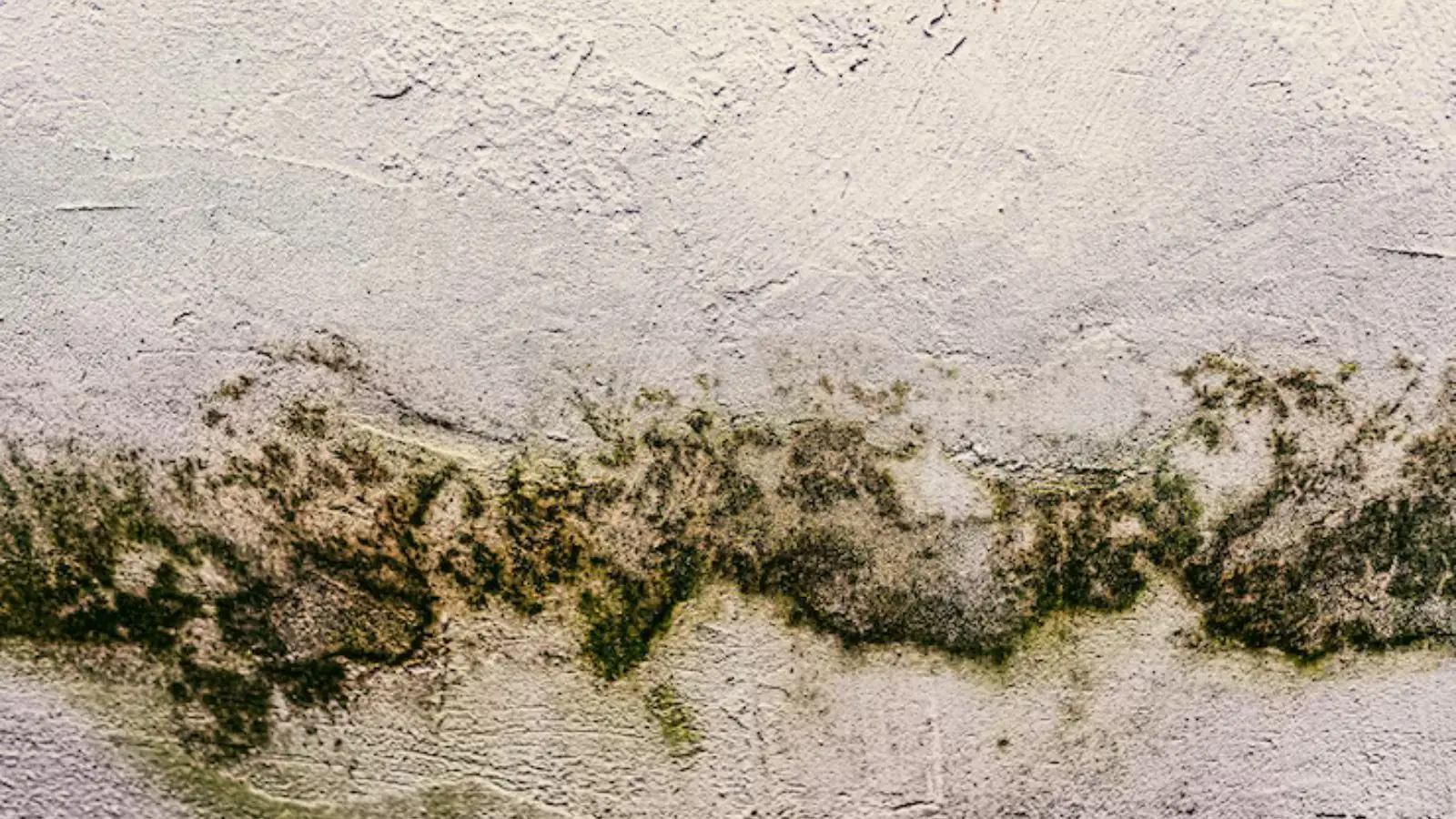
Most people picture mold as black and fuzzy. In real homes it can be green, white, gray, brown, orange or black, flat or fuzzy, and sometimes it looks like nothing more than a smudge or a stain.
The CDC says mold can look like spots of many different colors and can smell musty. This guide shows the usual appearances, the places it hides and how to decide what to do next. It gives no health advice, and any questions about symptoms belong to a physician.
Common appearances
- Dark spots or speckles on drywall, ceiling corners, bathroom walls and grout.
- Fuzzy or powdery patches in white, green or gray on cardboard, fabric and wood.
- Slimy or smeared films on wet surfaces such as shower walls or the underside of a leaking sink.
- Stains that look like dirt and wipe off partly but return, often at the base of a wall.
- Bubbled, peeling or cracked paint over a damp area, with spots under the film.
- A musty smell with nothing visible, which can point to growth in a wall or under flooring.
Color is not a reliable guide
People often ask about black mold. The CDC says you do not need to know the type of mold, and that no matter what type is present, it needs to be removed. Color alone does not tell you what you have, and a lab report on type does not change the basic steps. The question to answer is whether there is moisture and whether materials are affected.
Where mold hides
Mold needs moisture, and the EPA notes that none of the many types will grow without water or moisture. So the places to look are the places where water collects.
| Location | What it can look like |
|---|---|
| Basement walls and floors | Spots on block, white powder on concrete, musty smell |
| Ceiling below a bathroom or roof | Dark rings, spots at corners, peeling paint |
| Behind and under sinks | Dark film on cabinet backs and floors |
| Under carpet and pad | Spots on the pad or backing, musty odor |
| Around windows | Black or green spots on sills and trim |
| Closets on exterior walls | Fuzzy patches on walls, shoes and boxes |
Mold or something else
Some things look like mold and are not. Dirt, soot, efflorescence and old stains can all look similar. Efflorescence is a white, crusty salt deposit left by water moving through masonry, and it is common on basement walls. It is a sign of moisture, but it is not mold. A simple test is that efflorescence is dry and crumbly, and it dissolves in water, while mold tends to smear or look fuzzy.
If you are not sure, treat the area as a moisture problem first. Find where the water is coming from and whether the material is wet. A moisture meter reading helps more than a guess based on color.
Look at the source
A wet wall, a stained ceiling or a damp floor tells you what the mold needs, and fixing that source matters more than any cleaner. If you can find where water is entering, you can stop the growth from returning. If you cannot, hidden leaks inside a wall may be the cause. A restoration company can use a moisture meter and thermal camera to find them.
What to do if you see it
- Do not disturb it. Brushing or dry scrubbing can spread spores around the house.
- Find and stop the moisture source.
- Take photos and note where and when you saw it.
- For a small area on a hard surface, the EPA says you can often handle it yourself if it is less than about 10 square feet, by scrubbing with detergent and water and drying completely.
- For a larger area, a patch on drywall or carpet or anything linked to a big water event, get professional help.
Porous materials such as ceiling tiles and carpet may need to be thrown away if they become moldy, according to the EPA.
Mold and water in Linden
Linden has several places where water lingers. The Tremley Point neighborhood sits at the headwaters of Marshes Creek and has been described by project engineers as prone to backwater flooding, because runoff cannot drain fast enough when tides are high.
The county hazard mitigation plan also notes tidal backflooding when high tide meets heavy rain. In parts of the city like these, basements, crawl spaces and ground-floor rooms are the first places to check after a wet season for dark spots, damp walls and a musty smell.
When it follows a water loss
If a leak or flood happened recently and you can see growth, it is a sign that drying did not happen in time. The EPA advises drying water-damaged areas in the first 24 to 48 hours to prevent mold growth. For what remediation involves, see mold remediation, and for the drying that prevents it, structural drying.
Mold questions come from nearby towns as well, including Roselle Park and Elizabeth, where older buildings with damp basements are common to check.
Questions about how mold looks in Linden homes
Is all black spotting on a basement wall mold?
Not always. It can be dirt, soot or staining. Moisture and a musty smell make mold more likely, and a meter reading helps.
Does white powder on basement block mean mold?
It might be efflorescence, a salt deposit left by water in masonry. It points to moisture, so look for the source.
Do I need a lab test to tell the type?
The CDC says you do not need to know the type of mold, because any type needs to be removed.
Can I wipe it off and move on?
A small hard-surface spot can be cleaned, but the moisture must be fixed or it will return.