
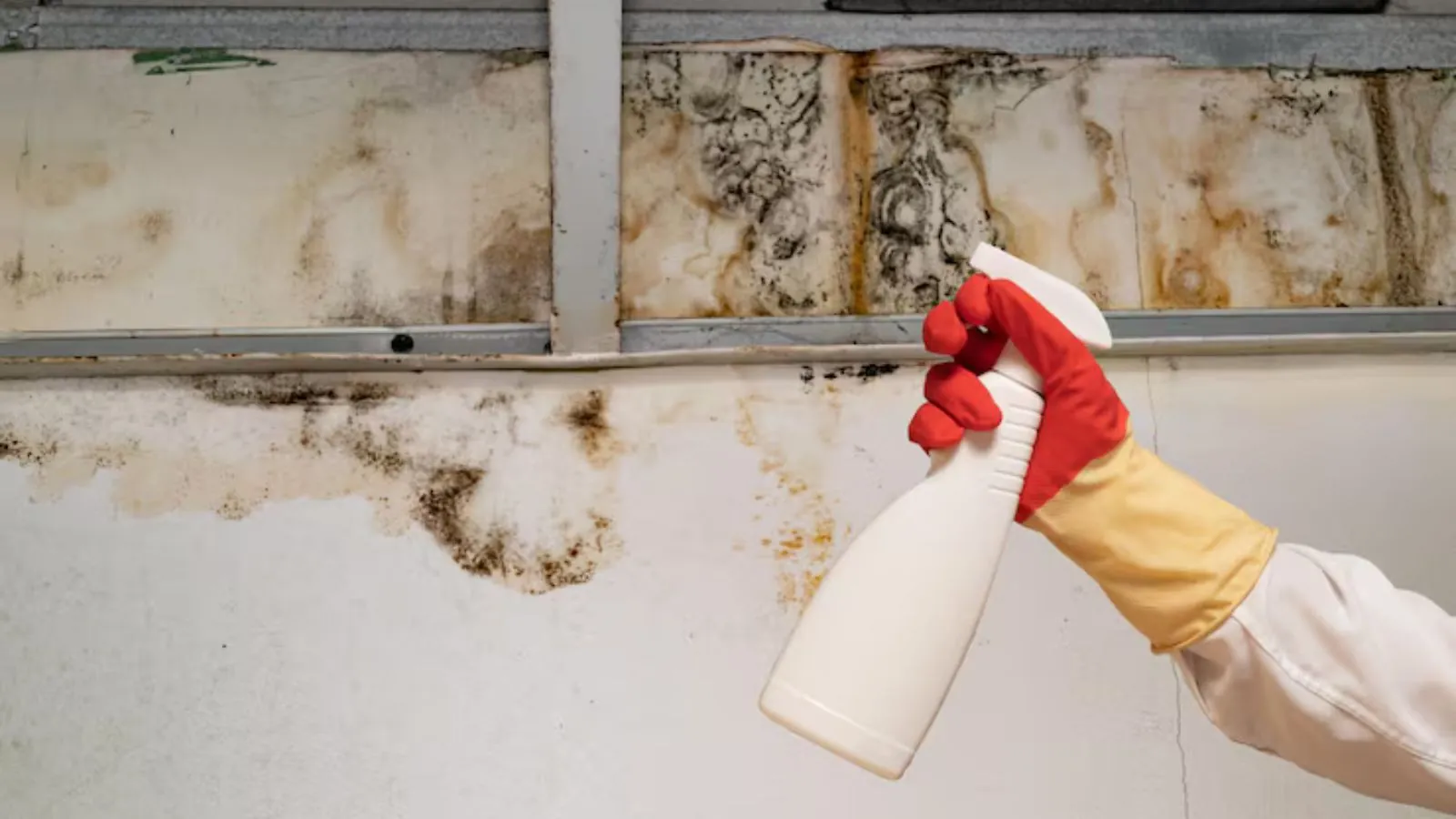
People search for what kills black mold hoping for a spray that ends the problem. The honest answer has three parts. Removing it from a hard surface is straightforward, dead mold still has to be removed, and the moisture decides whether it returns. This guide sticks to what the EPA and CDC publish and gives no health advice, since those questions belong to a physician.
Killing is not the same as removing
Mold that is dead can still be present as material on a surface. The CDC says that no matter what type of mold is present, you need to remove it. The EPA guidance for hard surfaces is to scrub mold off with detergent and water and to dry completely. So the key step is physical removal, not a particular chemical.
What the agencies say about cleaners
The CDC says mold can be removed from hard surfaces with household products, soap and water, or a bleach solution, and it gives guidance for those who choose bleach. The EPA page on cleanup points to detergent and water. Neither says that a stronger chemical is required, and neither recommends a special product for black mold.
Always follow the product label, ventilate the space and never mix cleaning products. Wear gloves and eye protection.
| Option | What it does | Notes |
|---|---|---|
| Detergent and water | Removes growth by scrubbing | The EPA method, then dry completely |
| Household cleaners | Remove growth from hard surfaces | Follow the label |
| Bleach solution | Listed by the CDC as an option | Follow the label, never mix with other cleaners |
| Painting over | Hides the problem | Does not remove mold or fix moisture |
What does not work
- Fogging or spraying the surface of porous material. Spores and growth lie below the surface of drywall, ceiling tile and carpet.
- Painting or sealing. Paint can bubble and fail over a damp surface, and the mold is still under it.
- Running a dehumidifier alone on visible growth. It dries the air but does not remove growth.
- Ignoring the source. If the moisture continues, growth returns.
Porous materials
The EPA says absorbent or porous materials such as ceiling tiles and carpet may have to be thrown away if they become moldy. That is also the usual outcome for moldy drywall and insulation, because the growth spreads through them and cannot be reached with a cleaner.
This is part of the reason that big problems call for professional remediation, which uses containment and negative air to keep spores from spreading through the building.
Moisture is the real answer
The EPA says none of the many types of mold will grow without water or moisture. If you remove the moisture, growth stops. If moisture returns, growth returns. The practical steps are to fix leaks, dry wet materials in the first 24 to 48 hours as the EPA advises, ventilate bathrooms and kitchens and keep basements and closets from staying damp.
Is it black mold
Color is not a reliable identifier. The CDC says mold can look like spots of many different colors, and that you do not need to know the type of mold. A black spot may be mold, dirt or soot.
What matters is whether the area is damp, whether materials are affected and how big the area is. If you suspect a large area or hidden growth, a professional assessment is better than guessing from color.
What not to do
Do not mix cleaning products, and do not scrub a large moldy area dry without protection, since that can spread spores through the room. Painting over mold does not fix it, because the moisture underneath is still there. If the area is larger than about 10 square feet, or you find it after a flood or sewage backup, a professional assessment is the safer next step.
Linden drains, storms and damp spots
The county hazard mitigation plan notes that storm drains in some parts of Linden back up in heavy rain when tree roots restrict sewer lines. If a backup reached a basement, the water is Category 3 contaminated water, and cleaning it with household products is not the right approach.
The sewage backup page explains the safety limits. In a Linden basement after a sewer or storm event, drying and removal of porous materials come first, and mold products come last.
When to call for help
Call for professional help if the growth is larger than about 10 square feet, if it is inside a wall or under flooring, if it followed a flood or sewage or if the moisture source is unclear. See mold remediation for how the process works and sewage backup cleanup for contaminated water.
The same advice applies in neighboring Roselle Park and Elizabeth.
Mold work is guided by ANSI/IICRC S520, the published standard for professional mold remediation. The EPA also says that no mold grows without moisture.
Questions about killing mold in Linden homes
Will bleach kill the mold on my basement wall?
Bleach is listed by the CDC as one option for hard surfaces, but scrubbing and drying matter most, and porous materials may need removal. Follow the label.
Is vinegar better than bleach?
Neither the EPA nor the CDC pages cited here single out vinegar. Detergent and water with scrubbing and thorough drying is the EPA method.
How do I know if the mold is dead?
Dead mold still needs to be removed. Focus on removal and on whether moisture is gone.
Does a dehumidifier kill mold?
It lowers humidity, which helps prevent growth, but it does not remove existing growth.